Interior Waterproofing – Inside Protection
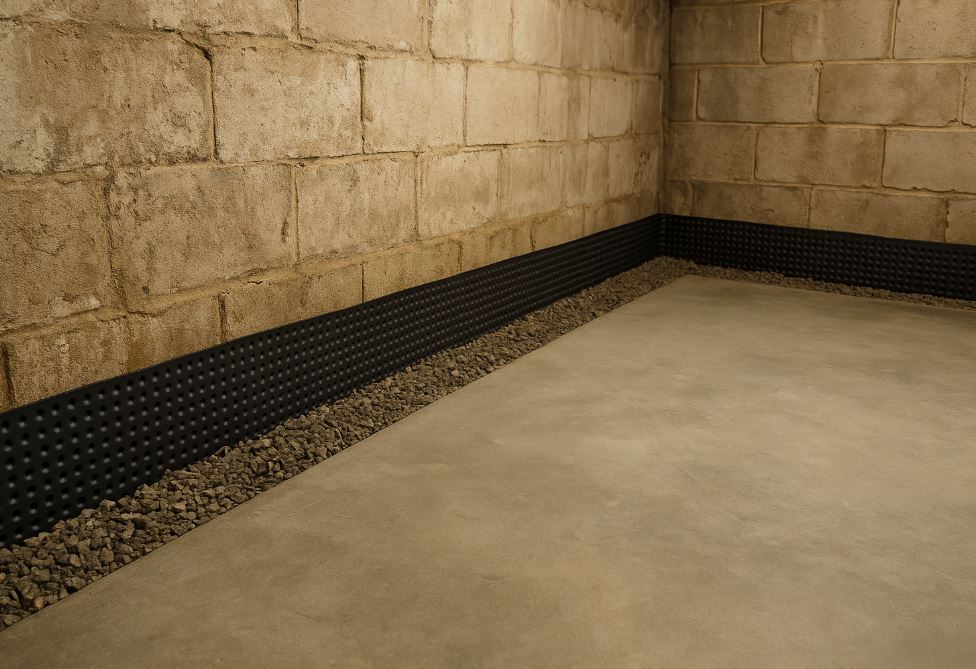
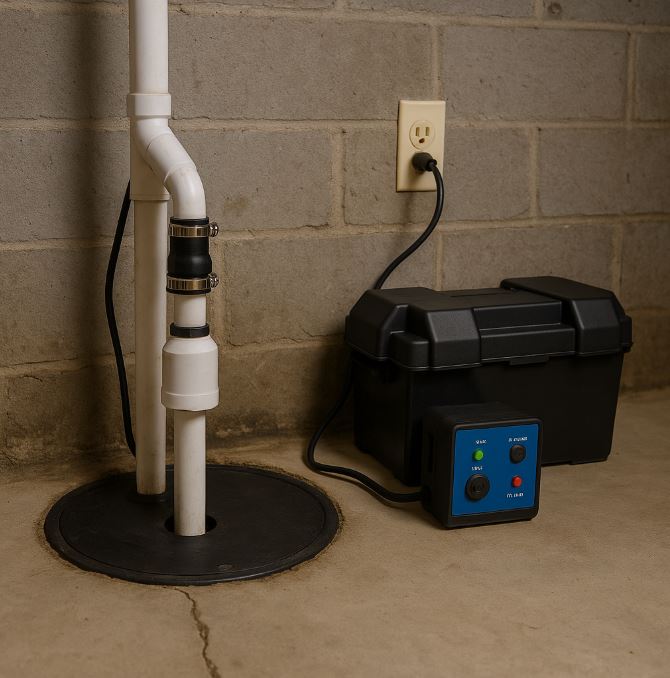
Discreet channels along the wall–floor joint direct water to a sealed sump basin, where a high-output pump discharges it safely away. Ideal for managing seepage without excavation.

 Contact Us
DryNest is the basement waterproofing company in Toronto that homeowners call when they want a dry, healthy lower level without guesswork. We protect homes in Toronto, including the entire GTA, with solutions tuned to local soil profiles, freeze-thaw cycles, and varied building types.
A musty odour, flaking paint, damp floor edges, or hairline crack lines along the wall are early warnings that moisture is moving where it shouldn’t. Ignore them, and minor issues can become expensive damage: warped finishes, spalling concrete, and compromised framing. In older homes, hydrostatic pressure around the foundation can increase after storms or snowmelt, pushing water through pores and joints that once seemed tight. As a result, you may need to spend tens of thousands on renovation (or even construction) instead of getting preventive basement waterproofing services.
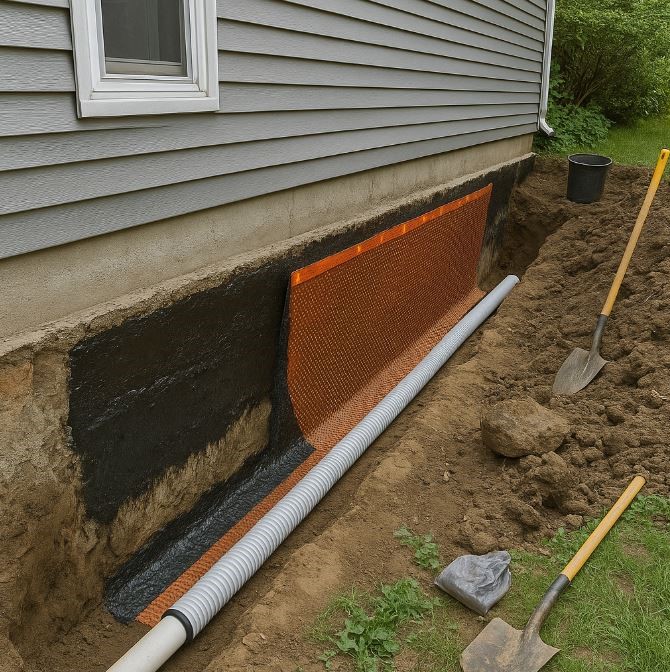
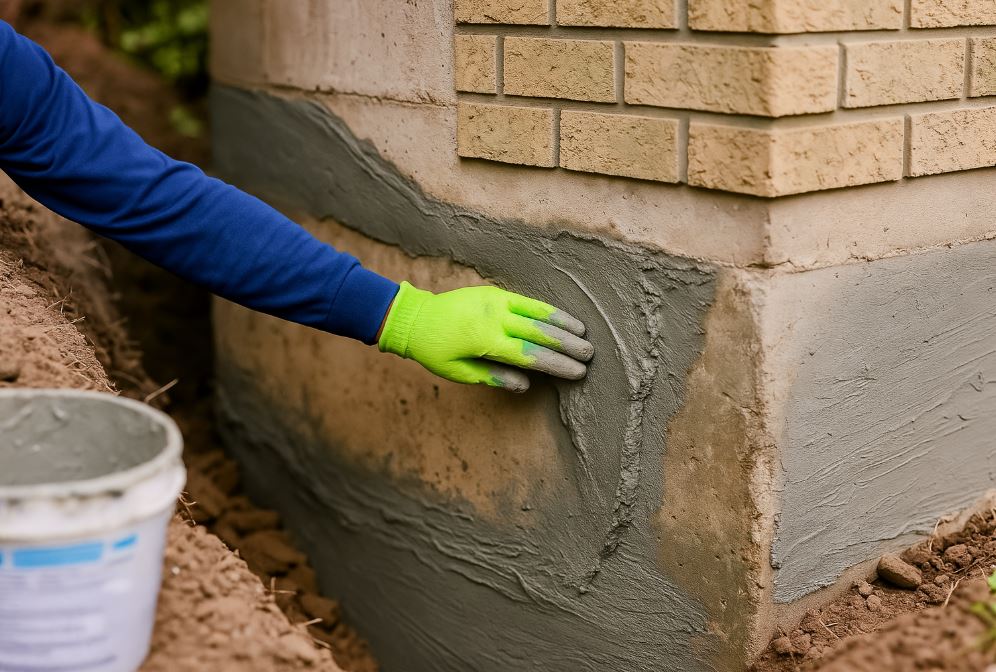
DryNest is the licensed basement waterproofing company in Toronto that knows how to address these problems from both sides. Interior solutions manage water that has already entered by capturing it at the wall–floor joint, channeling it to a sump pit, and moving it out with a reliable pump. Exterior strategies are built to prevent entry altogether, using layered membranes, dimple boards, granular backfill, and engineered drainage paths sized for local rainfall data. Both approaches can work independently; used together, they create a resilient envelope that protects your property.
Not sure which route fits your home in Toronto and the GTA? Book a free inspection by our Toronto wet basement contractor crew. We’ll trace the source, differentiate cosmetic from structural issues, and recommend the precise installation that fits your project scope and cost expectations.
When people compare other Toronto basement waterproofing companies, they look for speed, clarity, and proof. We turn up when we say we will, walk you through the plan, and deliver what’s promised. From the initial assessment to final clean-up, we communicate plainly and back every step with photos, measurements, and warranty documents you can keep for resale or insurance. It’s why homeowners routinely recommend us as their go-to basement waterproofing contractor in Toronto and across the GTA.
Get A Free Estimate
"We show up fast, communicate clearly, and deliver expert results, earning the confidence of homeowners who want lasting protection from basement leaks."
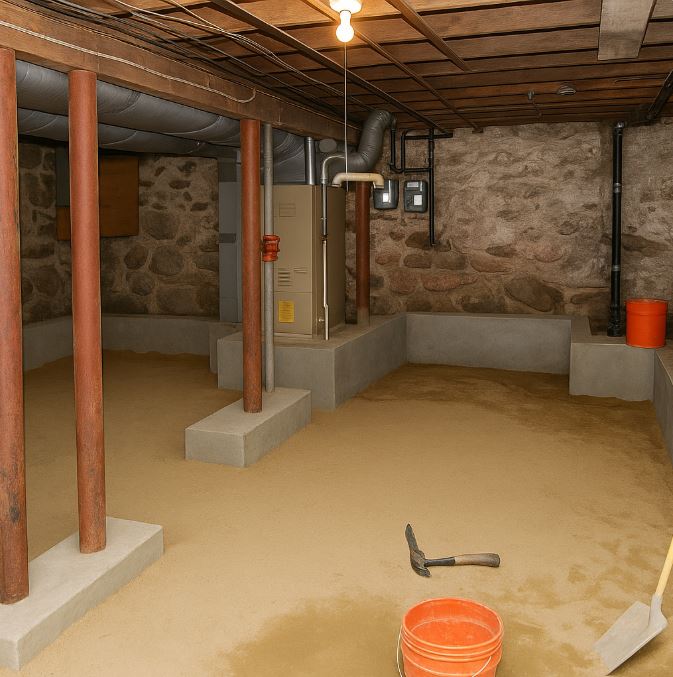
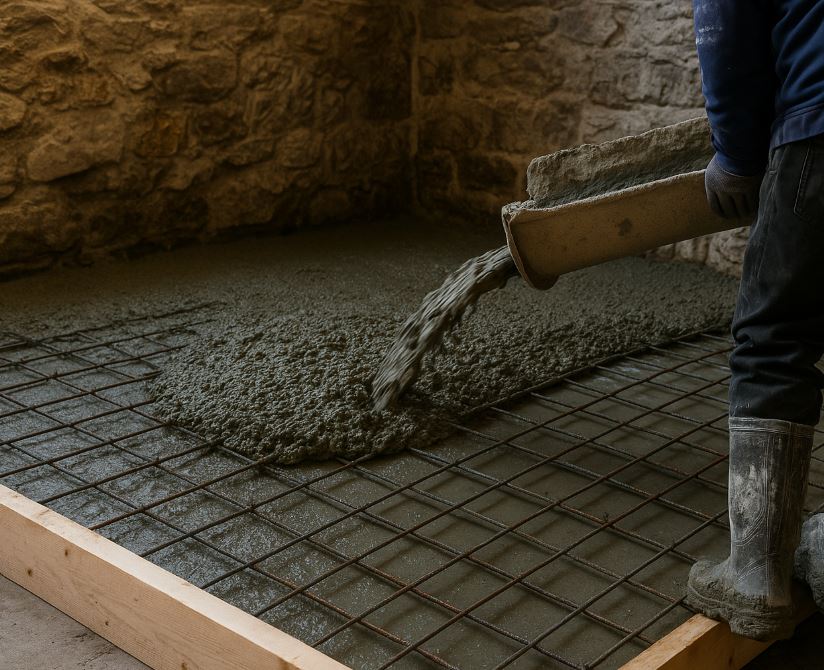
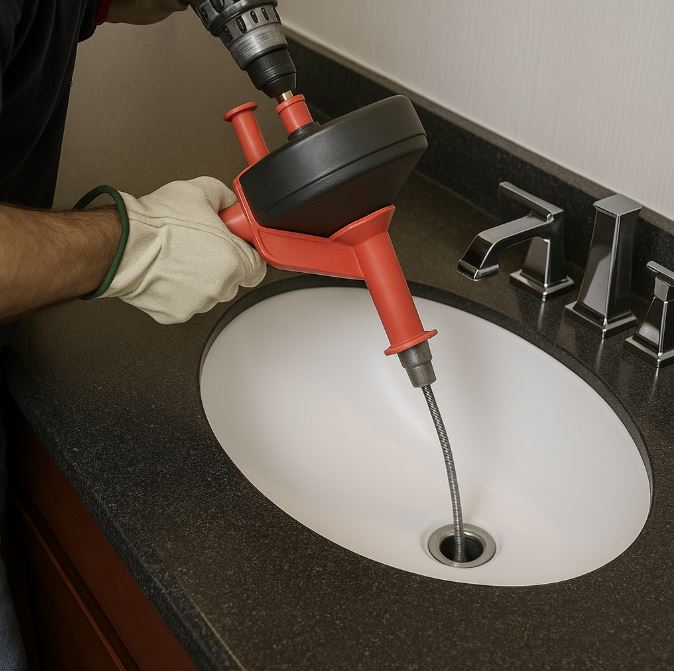
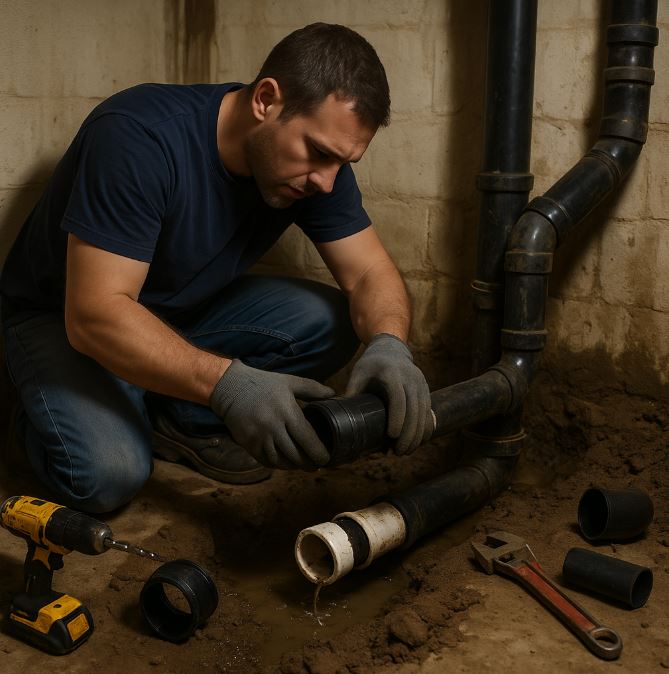
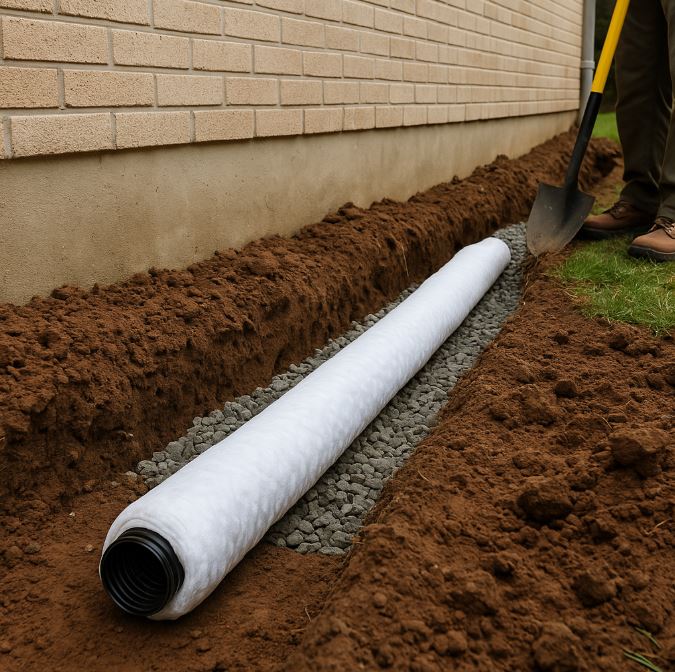
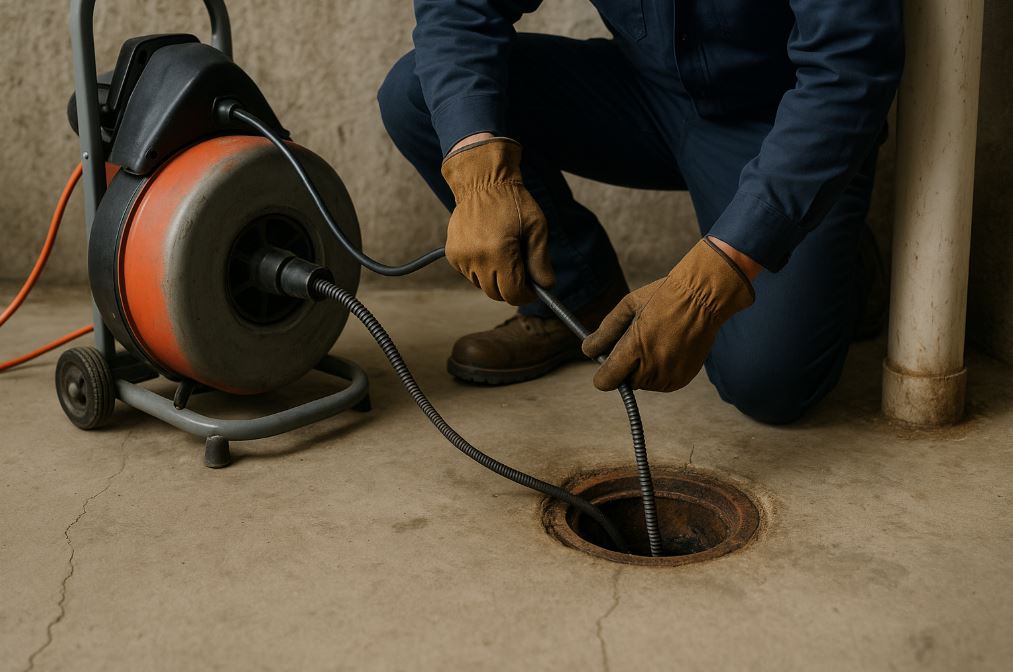
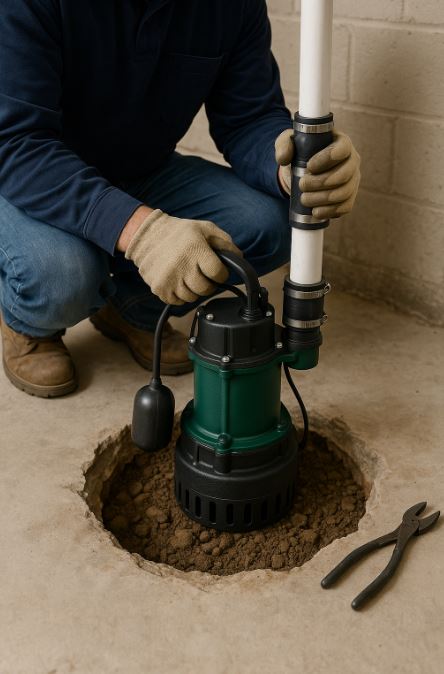
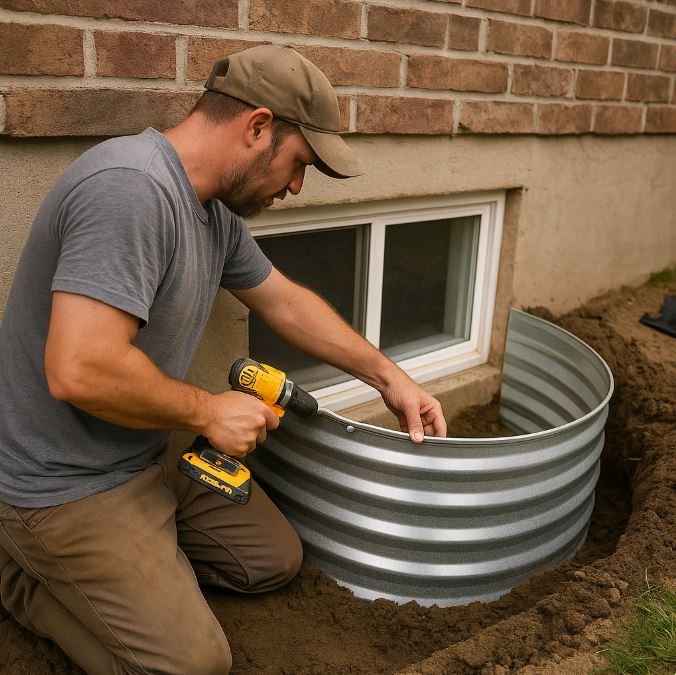
Basement moisture is a common issue for Toronto homes, whether from subtle wall seepage, floor cracks, or pressure from surrounding soil. Left untreated, it can affect your air quality and compromise the structural integrity of your home.
At DryNest, we tackle basement water problems inside and out. Interior solutions manage water that gets in by channeling it away and sealing vulnerable areas. Exterior methods defend your home before moisture enters, using proven drainage layers, waterproof barriers, and soil-specific systems. Each approach is designed for Toronto’s unique climate and soil conditions.
Noticed the warning signs? Book your free inspection today.
Some homes show more than cosmetic signs: stepped crack lines in block walls, horizontal bowing, or a floor that’s no longer level. These symptoms can follow years of freeze–thaw cycling, changing water tables, or age-related concrete fatigue. DryNest’s Toronto wet basement contractor crew offers targeted foundation stabilization for Ontario homes, from older block basements to newer poured walls, always matching the approach to observed loads and soil behavior.
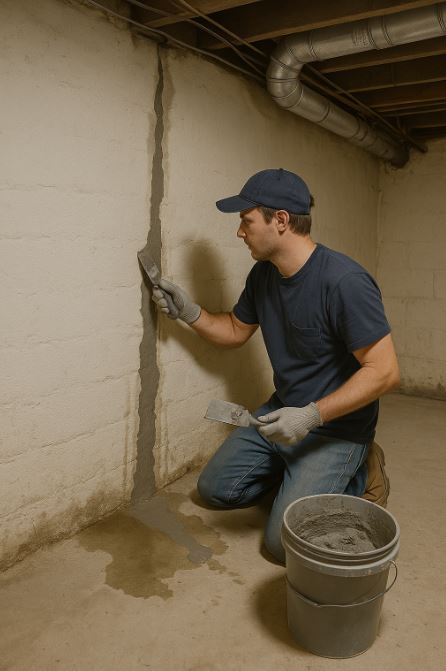
We start with a careful survey: wall plumbing checks, slab elevations, soil descriptions, and hydrostatic considerations. Minor crack networks may be treated with epoxy injections; bowing can call for steel bracing or carbon reinforcement; edge settlement may benefit from bench footing instead of full underpinning. Where damage is extensive, we’ll propose selective rebuilds that restore strength and continuity while maintaining budget control. Every project is completed by licensed, insured crews, documented for permits, resale, and insurer inquiries, protecting the property and the owner alike.

Structural Damage: Unchecked moisture weakens mortar and creates pathways that widen over time. The result is progressive damage, from rebar corrosion to spalling, that can cost far more than early intervention.
Decreased Property Value: Buyers notice odors, staining, and crack patterns. Unresolved issues reduce offers, complicate financing, and trigger conditions that delay closing.
Pest Infestations: Damp, dark areas attract wood-destroying insects and rodents. Effective interior and exterior protection helps prevent the habitat that pests love while preserving indoor air quality.
Toronto Waterproofing Experts
Toronto Waterproofing Experts
Toronto Waterproofing Experts
Toronto Waterproofing Experts
Toronto Waterproofing Experts
Toronto Waterproofing Experts
In Toronto and the GTA, the cost of wet basement contractor services typically ranges from $65 to $250 per linear foot. Where your home falls in that range depends on the approach (non-invasive interior capture vs. excavated exterior prevention), access constraints, depth, and any structural repair needs. Exterior work with deep digs or wall straightening tends toward the high end; a straightforward interior channel and sump pump installation is usually more economical.
Transparency matters. Your DryNest proposal itemizes materials, labour, scope, warranties, and scheduling so you can compare options without pressure. No surprise line items, no last-minute add-ons, just a clear path to a dry home and long-term protection of your property.
Every site is different, but most Toronto wet basement contractor providers follow the same logic: choose the method that addresses the source and fits the project constraints. Interior channels and sump pump setups manage inflow efficiently when excavation is impractical. Exterior solutions wrap the structure and prevent entry, often chosen when access is available or when external pressure is the dominant problem. Your written estimate will include a detailed cost table for materials, installation, and labor, all aligned to Ontario Building Code requirements and municipal permitting.
Toronto and the GTA homeowners call DryNest for results, from Mississauga infill lots to North York streets with older clay tiles. Recent projects include a multi-family interior system with dual sump basins and a battery backup pump, a full exterior membrane and drainage upgrade on a century home, and a targeted crack injection with finish restoration where a single cold joint was the culprit. In each case, the goal was the same: prevent new inflow, stabilize the structure, and preserve property value with a durable, code-compliant installation.
"The DryNest team showed up on time, explained every step, and delivered exactly what they promised. They waterproofed our basement with an interior system and battery backup. It’s been dry ever since, even during record rainfall."
At DryNest, a reliable outcome starts with a disciplined workflow of our Toronto wet basement contractor teams. Every project is documented from the first photo to the last test, with options and cost implications explained in plain language. We combine internal capture with external prevention where needed, select the right installation method for the site, and size the sump pump components to performance, not just price. All work is delivered by licensed, insured crews under the Ontario Building Code, so your property ends up both drier and fully compliant.
First, we listen. You walk us through symptoms, odours, visible stains, or where you’ve seen water after storms. Then we measure. Our specialist checks relative humidity, inspects the wall–floor joint, maps crack patterns, and tests drainage routes with dye or camera tools where appropriate. If you already have a sump pit, we assess pump output, switch function, and discharge routing. You receive a written estimate, clear scope, line-item costs, timeline, and warranty, so you can compare approaches side by side.
A wet corner can be deceiving. We determine if the source is hydrostatic pressure, surface grading, downspout discharge, or a failed drain line. From there, we tailor a plan: interior channel and sump for management, exterior membrane and drainage board for prevention, or a hybrid to balance access and budget. We also call out any structural red flags, like step crack patterns or out-of-plumb walls, and, if needed, phase in stabilization so your installation protects both finishes and structure for the long term.
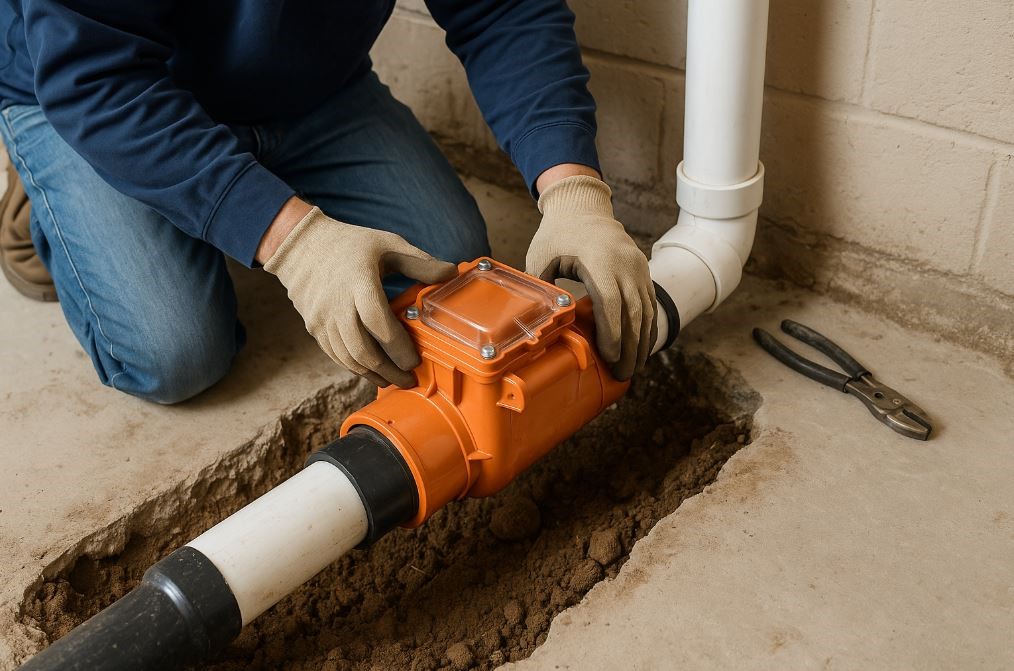
When exterior access is feasible, we excavate to footing depth, protect landscaping where possible, and stage clean backfill. Walls are cleaned and prepped for membranes and drainage layers that actively prevent entry before water touches concrete. When outside access is limited, our interior prep keeps disruption focused: we cut a narrow strip at the floor perimeter, install capture channels and a sealed sump basin, and reconnect to existing or new discharge lines with backflow protection. Either route ends with a tidy, code-compliant installation.
Next comes precision work. Active cracks are injected with epoxy or polyurethane to re-bond the plane and block seepage. We integrate vapor barriers, tie drain channels into the sump, and size the primary pump for realistic inflow, then add a battery backup pump for resilience. On exterior jobs, we wrap the wall with a robust membrane and dimple board, lay a perforated drain at the footing wrapped in filter fabric, and discharge to daylight or a legal tie-in. Every installation is pressure-tested before close-up.
We backfill with clean, free-draining material and reinstate surfaces. Inside, concrete is re-poured to a smooth, durable finish, seams are tooled, and the site is left broom-clean. We then test the system under flow, document readings and photos, and walk you through maintenance, how to check the floats, when to service the pump, and simple routines to prevent avoidable issues. Your final package includes warranties, before/after photos, and any inspection documents you may need for insurers or future buyers.
Water doesn’t wait for business hours. If you’re facing water rising on the floor, an overwhelmed sump pump, or a sudden sewer backup, call DryNest. Our emergency crews mobilize with high-capacity extraction equipment, commercial dehumidifiers, and targeted sealants to stabilize the site quickly. Step one is to stop the inflow, sandbagging, temporary by-pass pumping, or isolating a failed drain. Step two is controlled removal and damage limitation. We set containment, protect unaffected areas, and make smart, interim choices that prevent secondary issues like mold or warped finishes.
Once conditions are safe, we outline permanent fixes, often a hybrid of interior capture and exterior prevention, and give you a clear, written plan with cost ranges so you can decide on next steps right away. All actions are documented for insurance, with photos and a work log you can forward to your adjuster. Whether you’re in Toronto proper or anywhere across the GTA, you’ll get a rapid response from a Toronto basement waterproofing company built for urgent calls as well as scheduled work.

Ontario homes see freeze-thaw cycles, clay soils that swell and shrink, and storm patterns that can overwhelm older drainage designs. Our Toronto basement waterproofing contractor team grew up solving these realities. We understand where external pressure tends to build, how downspouts should be routed in tight lots, and which membranes hold up best against granular backfill. That’s why homeowners comparing Toronto basement waterproofing companies so often choose DryNest.
Every crew is licensed and insured, trained to meet Ontario Building Code and municipal standards for backwater valves, discharge routing, and excavation safety. You’ll receive documentation for permits, inspection, and resale, including installation schematics where appropriate. This is one reason real estate agents and insurers refer us as a dependable Toronto basement waterproofing contractor when their clients need verifiable, durable outcomes.
We build for the long-term. That means membranes with tested elongation, drain fabrics that won’t blind off, and sump pump packages sized for the “bad day,” not just the average one. The goal isn’t to move the symptom; it’s to prevent the problem. Where structure is stressed, we combine crack stabilization or bench footing with moisture control so your property holds its value and your finishes stay safe.
Homeowners deserve clarity. We break down cost by scope, materials, labour, and installation time, so you see exactly what you’re paying for. If conditions change mid-job (a collapsed drain uncovered, for example), we pause and show you evidence before proposing options. It’s straightforward, pressure-free, and why DryNest is often the Toronto basement waterproofing company people recommend to neighbours.
From a failed pump at 2 a.m. to a sudden sewer surge during a thunderstorm, we’re ready. Fast containment and practical triage prevent cascading damage. Then we return to implement the permanent solution. It’s comprehensive support from one Toronto basement waterproofing contractor, start to finish.
Across the GTA, clients praise our tidy sites, courteous crews, and solutions that actually stay dry. Many first found us after other Toronto waterproofing contractors tried, and failed, to solve persistent issues. DryNest’s mix of diagnostics, exterior/interior options, and careful installation is why so many reviews read the same way: “Finally fixed.”
You can seal a small crack or extend downspouts as DIY steps, but full installation is best left to Toronto basement waterproofing contractors. Proper sizing of sump pump components, code-compliant discharge, and membrane detailing are critical to avoid recurring issues or unintended damage.
Expect roughly $65–$250 per linear foot in Ontario, depending on depth, access, and whether you choose exterior prevention or interior management. Structural concerns, heavy clay, or complex tie-ins can affect cost. We provide a written estimate that separates labour, materials, and installation so you can plan with confidence.
Absolute 100% is unrealistic under every scenario, but you can get extremely close by combining exterior membranes and drainage boards with interior capture and a robust sump pump package (plus a backup pump). The layered approach both prevents entry and manages any incidental moisture, a standard we design for at DryNest.
Both are valid; the choice depends on the source and access. Exterior systems prevent entry and reduce wall saturation; interior systems efficiently capture inflow where excavation is impractical. A reputable Toronto basement waterproofing company will explain which approach, or hybrid, best safeguards your property for the money.
There isn’t a single best method for every home. If access is limited, interior channels plus a sump pump can control inflow reliably. When feasible, an exterior membrane and perimeter drainage will prevent entry in the first place. Many GTA homes benefit from a hybrid, chosen after a thorough diagnosis by a Toronto basement waterproofing contractor.
A correctly designed installation delivered by licensed, insured crews often lasts 25+ years, provided pumps are serviced and drain routes remain clear. Membrane longevity, soil type, and maintenance frequency all play a role. We outline simple upkeep that protects your long-term investment.
Even before contacting Toronto basement waterproofing contractors, there are signs you need to pay attention to. These are the first indicators of your lower floor leaking:
A lingering earthy smell suggests persistent moisture, even if you don’t see standing water, airborne spores thrive on damp surfaces.
Thin lines can be harmless shrinkage or the first sign of movement. If active, targeted injection and drainage improvement around the wall–floor joint can stop seepage and prevent progressive issues.
Puddles by the wall, damp corners, or darkened cove joints following storms point to overloaded drain routes or surface grading concerns.
Standing water on the floor often indicates a failing pump, a stuck float, or an undersized basin.
When water runs from the wall–ceiling line, external grading and eaves routing are prime suspects, and pressure may be driving moisture over the top plate.
Visible mold or mildew spots often mean excessive moisture, which creates an ideal environment for their development.
Tell us what you’re seeing, and we’ll take it from there. A DryNest specialist will inspect, explain findings, and outline options, from economical interior capture to comprehensive exterior prevention, so you can pick the right solution at the right cost.
Call or fill out our quick form
We will confirm your appointment within 24 hours
A certified technician checks your basement
Explains the best waterproofing options
Clear cost breakdown and warranty details
Next steps outlined for a dry, protected basement