
 Contact Us
French Drain Installation in Toronto
Stop puddles before they reach your home. DryNest designs and builds professional French drain solutions in Toronto that quietly move storm runoff away from your foundation and keep living spaces dry season after season.
Trusted French Drain Contractor in Toronto
Choose a team that treats your yard like a system, not guesswork. As a local French drain installation company, DryNest pairs careful site diagnostics with tidy field work, using durable components and documented methods. Homeowners comparing Toronto French drain contractors appreciate our clear timelines, photo records, and warranties that make decisions simple.
If you are evaluating drainage contractors in Toronto, ask us for similar before-and-after projects in your area and a written schedule that respects your time. For those seeking a long-term partner rather than a one-off visit, we are the French drain company many neighbors recommend.
What is a French Drain?
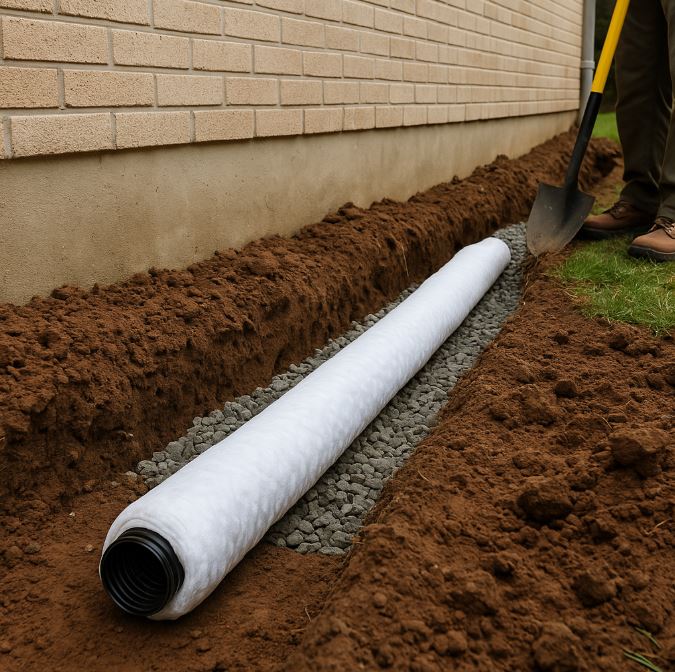
A French drain is a subsurface drainage pathway that intercepts groundwater and surface runoff, then redirects it to a safe outlet. The basic system includes a narrow trench, a bed of washed gravel, a perforated pipe wrapped in filter fabric, and a route to daylight, a storm tie-in, or a sump. By lowering saturation near the wall, this assembly reduces hydrostatic pressure that can cause hairline cracks, seepage, and interior humidity. In short, it is a quiet, effective solution for protecting your property and house from seasonal damage.
 French Drain Installation in Toronto
French Drain Installation in Toronto
French Drain Installation in Toronto
French Drain Installation in Toronto
French Drain Installation in Toronto
French Drain Installation in Toronto
French Drain Installation in Toronto
French Drain Installation in Toronto
French Drain Installation in Toronto
French Drain Installation in Toronto
French Drain Installation in Toronto
DryNest French Drain Installation Process
-
Step 1

Trench Excavation
We map grades, mark utilities, and cut a narrow trench to the engineered depth and slope. Clean staging and protection boards keep landscaping safe while we work. Proper geometry ensures the French drain installation performs as designed.
-
Step 2
Adding a Protective Gravel Layer
A uniform bed of washed gravel creates voids that accelerate flow. We compact lightly to maintain structure without crushing fines into the pathway, preserving long-term capacity and quality.
-
Step 3
Installing the Drainage Pipe
A perforated line wrapped in fabric is set with the holes oriented for the site plan, then connected to a legal discharge point. Joints are sealed, transitions are smooth, and the route avoids sharp bends that slow water.
-
Step 4
Backfilling & Final Sealing
We wrap the assembly in filter fabric, add more washed stone and/or gravel, and cap the trench with soil or turf. Where the line approaches the foundation, we coordinate with exterior details to protect the wall and limit future repair needs.
Why Might You Need French Drain Installation?
Standing water along the fence line, soggy lawn patches, and damp corners in the lower level are classic signals that the soil cannot move water fast enough. Over time, those conditions can lead to crack growth, house foundation damage, spalling, and higher indoor humidity. A well-designed French drain installation intercepts inflow, lowers saturation around the foundation, and sends it to a safe outfall. For homes battling puddles in spring or thaw cycles, this upgrade restores a usable yard and helps protect finishes inside. The payoff is comfort, less maintenance, and fewer surprises after storms.

Why Choose DryNest For Your French Drain Installation?
-
Local specialists who focus on outcomes - Our crews design and build systems that fit Toronto soils and neighborhood layouts. You get clear options, line-by-line pricing, and tidy service from start to finish.
-
Certified teams you can trust - Work is completed by professional technicians with field experience. We document each step of the installation, test the outlet, and walk you through simple upkeep.
-
Quick scheduling when the weather is closing in - Coordinators watch forecasts and prioritize urgent calls, so your project gets a fast response. The goal is to stabilize your yard before the next storm arrives.
Licensed Waterproofing Professionals You Can Count On
Get A Free EstimateDryNest Basement Flooding Protection Rebate Program
Some municipalities offer incentives for resilience upgrades for certain properties. Our company helps homeowners assemble accurate applications, so reviews move smoothly and reimbursements are not delayed by missing steps.
How DryNest Helps You Qualify:
-
Code-compliant work through experienced licensed plumbing partners, with photos and measurements recorded for your file.
-
Detailed service invoices and, when helpful, camera footage documenting tie-ins and outlet conditions.
-
Permit preparation, inspection tracking, and a complete package ready for submission.
Requirements to Qualify:
-
A professional licensed contractor must perform the scope and issue an itemized receipt.
-
Proof of payment must accompany the rebate request.
-
City permits and final inspection sign-offs are commonly required.
-
The house must include below-grade fixtures or lines that could flood.
How Does A French Drain Work?
1. Trench Installation - A narrow channel creates a preferential path under the surface. Correct depth and slope are essential to performance.
2. Perforated Pipe Placement - The pipe collects inflow through small openings while the fabric wrap keeps soil out. Orientation and connections matter to keep the system efficient.
3. Gravel Backfill - Washed gravel surrounds the pipe, promoting rapid flow and relieving pressure near the foundation and wall intersections.
4. Filter Fabric - A continuous wrap separates soil from stone so fines do not clog voids over time.
5. Water Collection - As the soil saturates, the path of least resistance becomes the trench and stone, which guide moisture to the pipe.
6. Water Discharge - The line carries water to daylight, a storm tie-in, or a basin. In finished homes, French drain installation in the basement connects to a sealed sump and check valve for managed outflow.

What Are The Types Of French Drains?
-
Traditional French Drain: A perimeter trench with perforated pipe and wrapped stone. Such a system handles steady inflow along edges where water tends to collect, and it is the most common choice for yards with soggy spots.
-
Curtain Drain: A shallow, up-slope trench system is placed like a curtain across the grade to capture sheet flow before it reaches the home. Ideal where the lawn slopes toward the building and pooling starts after heavy rain.
-
Dispersal French Drain: A network that spreads discharge across a larger area where outfall options are limited. It uses multiple laterals to avoid concentrating flow in one place, reducing erosion risk.
-
Interior French Drain: A managed route is installed inside along the wall-to-slab joint. It relieves pressure when exterior access is limited and pairs well with a sealed basin and pump. This is sometimes called French drain installation in the basement and works well under finished floors.
-
Trenchless French Drain: Selective boring and gravel-packed sleeves added with minimal surface disruption. Useful under decorative hardscape where open digging would be costly.
DryNest Support
-
Free On-Site Evaluation: Our specialists assess your yard’s drainage issues, grading, and soil conditions before recommending a system.
-
Transparent Planning: You receive a clear outline of trench routes, pipe placement, and material options before installation begins.
-
Certified Installation Crews: All work is handled by licensed and insured professionals experienced in exterior drainage and foundation protection.
-
Warranty Coverage: Every French drain system includes a written warranty on materials and workmanship for long-term peace of mind.
-
Emergency Assistance: If heavy rain causes pooling or backup, our emergency response team is available 24/7 for quick diagnostics and repairs.
-
Maintenance Guidance: We provide detailed care instructions for keeping your drainage system clear, efficient, and ready for every season.
What Is The Cost Of French Drain Installation In Toronto?
Key factors that influence estimates:
-
Length and Depth of the Trench
-
Soil and Terrain Conditions
-
Accessibility & Obstructions
-
Materials & Drainage Design
-
Interior vs. Exterior Installation
-
Landscaping Restoration & Permits
Average Cost Range
The cost of French drain installation in Toronto typically ranges from $25 to $50 per linear foot.
Pricing is driven by trench length, depth, soil class, outfall distance, and restoration details such as sod or hardscape. During your visit, our professionals will provide a written range tailored to your conditions and explain how changes in scope affect the budget. We are preparing a detailed pricing guide for French drain installation in Toronto so you can compare options, see sample layouts, and plan seasonally for best access and results.
Free Estimate + Rebate Support
DryNest offers a free consultation and quote, including a rebate eligibility check. Our team guides you through the entire process, from permit filing to final inspection – so your installation qualifies without hassle.
Free French Drain Installation Consultation
Whether you are in Toronto or elsewhere in the GTA, DryNest will review photos, schedule a quick site walk, and map a practical route that suits your yard and timeline. If interior humidity is also a concern, our team can combine basement French drain installation with a sealed basin and pump works, so inside finishes stay comfortable through seasonal thaws
Get A Free Estimate-
Site & Drainage Inspection
-
Soil & Terrain Analysis
-
Existing Drainage System Check
-
Trench Layout & Design Planning
-
Material & Installation Options
-
Permits & Utility Coordination
-
Estimate & Project Planning
FAQs About French Drain Installation
How long does French drain installation take?
Most residential drainage runs finish in one to three days, depending on length, access, and damage scope. Complex outfalls or hardscape crossings may add time.
How long do French drains last?
With proper fabric, stone, and outlet maintenance, a high-quality drainage system often serves for decades. Performance depends on material selection and keeping the outlet clear.
Will a French drain require maintenance after installation?
Yes. Professional seasonal checks to confirm outlet flow and occasional debris removal help preserve capacity. A little maintenance service or a quick rinse at the discharge point goes a long way.
Is a permit required for professional French drain installation?
Permits vary by house and outfall type, and municipality. Before the work starts, we verify requirements, prepare documents, and book inspections when needed.
How do I prevent clogged French drains?
Use washed stone, a continuous fabric wrap, proper pitch, and a protected outlet. Keep gutters and downspouts clean so silt does not overload the line. Inspect visually for cracks and any other damage, and contact professionals as soon as it is found.
Does a French drain need a membrane?
Not always. In many yards, fabric and stone or gravel are sufficient for the whole area. Near the foundation or where soils are fine, added barrier layers can improve performance.
How much water can a French drain handle?
Capacity depends on trench size, gravel voids, pipe diameter, and slope. We size the assembly to local rainfall patterns and your site’s contributing area.
How deep should a French drain be buried?
Depth is set by goals and outlet elevation. Yard lines are often 12 to 24 inches. Near foundations, the system’s depth aligns with footing level and design calculations.