
 Contact Us
Bench Footing Toronto
Reinforce your basement the right way with professional bench footing installation in Toronto. This method is ideal when underpinning isn’t required, but extra headroom or foundation support is needed.
Bench Footing Construction for Basement Lowering
Lowering a slab starts with a plan. A designer or engineer sets the new finished floor elevation, defines bench width and height, and selects reinforcement. The contractor sequences tasks, so the home remains safe and accessible. With this method, you gain clearance without excavating beneath the original footing, which is why it is ideal for shared walls and urban lots across the GTA.
Benefits of Bench Footing
1. Benching usually installs faster than underpinning, which helps families and tenants keep their routines.
2. Total bench footing basement costs are often lower, and the process involves less specialized staging.
3. The original walls remain untouched, which reduces risk to finishes and utilities.
4. There is significantly less deep excavation, making work easier in tight conditions.
5. It is useful near common walls when a neighbor will not allow digging under existing supports.
6. New headroom transforms the space for living, storage, or rental-ready layouts.
7. A clean, reinforced ledge and fresh slab give the room a modern look that appeals to buyers and tenants.
Disadvantages of Bench Footing
1. The ledge takes up a slim band of space, which can affect furniture placement.
2. Market value gains vary, especially if the bench edge is not integrated into built-ins or finishes.
3. Benching does not include crack repairs by default. If you need structural sealing or wall stabilization, that scope is added to the contract.
4. In some layouts, stairs and door swings need small adjustments to accommodate the bench edge.
Call Us: +1 (647) 561-7608
What is Bench Footing?
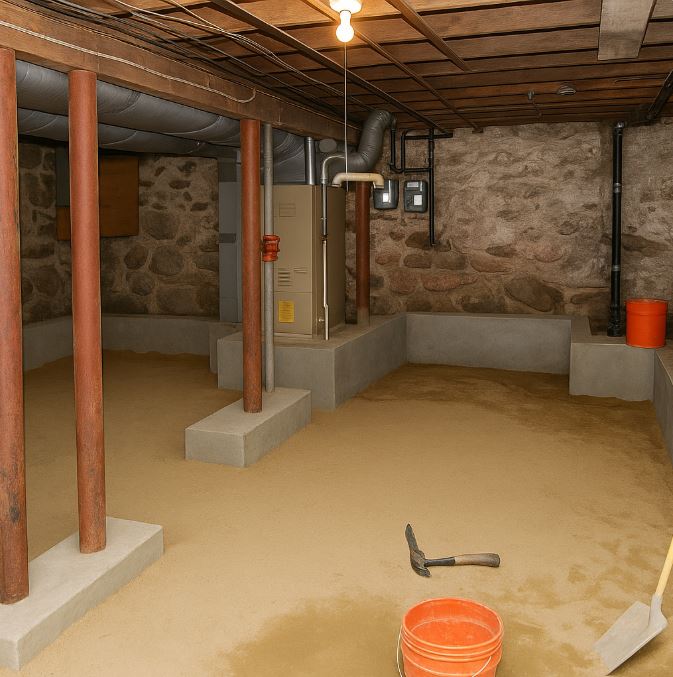
Bench footing (also known as basement benching) is a practical way to gain headroom by creating a new interior ledge that supports the existing walls while you lower the slab. Instead of digging under the original footing, you form a reinforced concrete bench that steps inward from the perimeter. The existing structure stays where it is, and a new slab is poured at the target depth. For many Toronto homeowners, benching is the balance between budget, timeline, and disruption when lowering a level for better comfort.
Think of the ledge as a permanent seat that carries loads back into stable soils without crossing the property line. The process preserves the original support while giving you new usable space. A well-engineered bench foundation can be paired with drainage upgrades, crack sealing, and moisture control to produce a dry, quiet, and code-compliant room. Where party walls or tight lots make deep digs risky, benching is often the smarter approach.
A permit package typically includes drawings, an engineer’s note on bearing capacity, and details for rebar, concrete thickness, and control joints. DryNest prepares all permit documents, manages inspections, and keeps the process moving so your project stays predictable. Many clients choose benching to avoid the higher engineering and staging requirements associated with underpinning while still achieving meaningful lowering.
 Bench Footing in Toronto
Bench Footing in Toronto
Bench Footing in Toronto
Bench Footing in Toronto
Bench Footing in Toronto
Bench Footing in Toronto
Bench Footing in Toronto
Bench Footing in Toronto
Bench Footing in Toronto
Bench Footing in Toronto
Bench Footing in Toronto
How DryNest Bench Footing Construction Works
-
Step 1

Structural Assessment & Permit Planning
We begin with a site inspection, record elevations, and assess soils. An engineer confirms loads and bench sizing. Our office prepares the permission application and books municipal reviews. You receive a schedule that marks each process step, including any waterproofing upgrades you request.
-
Step 2
Interior Excavation to New Floor Level
Selective excavation removes the existing slab and soils to the planned depth. We stage materials to keep your home clean and accessible. Laser levels guide the dig, so the new floor drains properly to any future collection points. During this stage, we protect utilities that cross the work zone.
-
Step 3
Formation of Bench Ledge & Reinforcement Grid
We set forms for the bench ledge and place rebar according to design notes. The grid ties back into sound concrete, and we install dowels to unify the ledge with the new slab. The geometry of the structure is essential: correct width, height, and steel layout keep loads predictable.
-
Step 4
Concrete Pour & Curing
A high-strength mix is poured for the ledge. We vibrate for consolidation and finish the face neatly to accept future trim or storage elements. Controlled curing protects early strength. This is the heart of bench construction, and our crews document each pour for the record.
-
Step 5
Floor Slab Pouring Around Bench
After the ledge reaches the required strength, we place vapor control, mesh, and any radiant tubing you may have chosen. Then the new slab is poured to the target elevation. This step locks the basement bench footing into the room, delivering a flatter, quieter floor ready for finishes.
-
Step 6
Inspection & Finishing Prep
Municipal staff complete the required inspections. We patch form tie holes, sweep, and prep edges so your trades can frame, wire, and insulate. You get a turnover package with photos and sign-offs that show exactly how your footing was built.
When Bench Footing Is a Better Option Than Underpinning
Basement bench footing in Toronto is often chosen when party walls and setbacks limit excavation depth, when a project needs a shorter timeline, or when budgets are tight. It also shines in lowering projects that include drainage work, where maintaining stability during the process is critical. If you need added height without the complexity of underpinning, and you want a predictable schedule, benching deserves a serious look.
Why Choose DryNest Bench Footing in Toronto?
-
Trusted Expertise: DryNest is a dependable provider of basement waterproofing and footing projects across Toronto and the GTA.
-
Licensed & Insured Crews: Every installation is managed by certified professionals who follow precise sequencing and maintain clean, organized worksites.
-
24/7 Emergency Response: Our line is monitored around the clock for urgent repairs or fast scheduling when tenants or timelines can’t wait.
-
End-to-End Service: From initial inspection to final permit closeout, our bench footing projects are handled by experienced technicians with proven field expertise.
Contact us and get your free estimate today!
Get A Free EstimateDryNest Basement Flooding Protection Rebate Program
Many municipalities support flood-resilience upgrades that may be completed alongside basement bench footing in Toronto, such as backwater valves or sump packages. DryNest coordinates applications, so your rebate file is complete.
How DryNest Helps You Qualify:
-
Ensure installation is code-compliant and handled by licensed plumbing contractors.
-
Provide detailed invoices, photo documentation, and camera footage for your application.
-
Handle all the filing and prepare a complete rebate package.
Requirements to Qualify:
-
A licensed contractor must complete the installation.
-
Detailed invoice and proof of payment required.
-
City permit and final inspection needed.
-
Home must have below-grade plumbing at risk of flooding.
When Does Your Home Need Bench Footings?
Consider bench footing when headroom is tight, deep excavation is constrained, shared walls limit access, or the project requires a shorter timeline. It also makes sense during slab lowering tied to drainage improvements, where stability and speed are key. If you plan built-ins along the ledge, this turns the edge into useful space while delivering the clearance you want.
When is Benching Required?
-
Too close to neighbour - property lines restrict deep excavation.
-
Shared walls - dividing walls make underpinning impractical.
-
Structural Integrity - preserving existing supports is the safer approach in some buildings.
Essential Precautions Before Starting Bench Footing
-
Soil Assessment - verify bearing capacity and seasonal moisture swings.
-
Determine Required Thickness - engineer the ledge and slab for loads.
-
Understand Basement Usage - plan for storage, living, or rental usage.
-
Long-Term Maintenance Costs - consider drainage and humidity control.
-
Comprehensive Area Analysis - confirm stairs, doors, and egress plans.
-
Structural Design Review - coordinate rebar, control joints, and transitions.
-
Obtain Necessary Permits - complete drawings and book the queue.
-
Prepare the Basement - protect utilities, mark clearances, and stage debris routes.
What Is The Cost Of Bench Footing In Toronto?
Key factors that influence estimates:
-
Excavation and Access Conditions
-
Foundation Depth & Bench Dimensions
-
Soil Conditions & Water Table
-
Permits, Engineering & Compliance
-
Scope of Additional Work
-
Size and Complexity of the Project
Average Cost Range
Bench footing in Toronto usually costs between $290 and $540 per linear foot. Prices may increase based on the size and depth needed, the difficulty of the site, and the materials used. Factors like site access and the need for special equipment can also impact the overall cost.
Free Estimate + Rebate Support
DryNest offers a free consultation and quote, including a rebate eligibility check. Our team guides you through the entire process, from permit filing to final inspection – so your installation qualifies without hassle.
Free Bench Footing Consultation
Whether you live in Toronto or the GTA, our coordinators can book a friendly walkthrough. We will confirm whether bench footing or underpinning fits the goals, explain timelines, and help with permits. The visit includes moisture checks and a clear outline for slab lowering so you can plan finishes with confidence.
Get A Free Estimate-
Site & Structural Evaluation
-
Excavation Feasibility
-
Load & Engineering Review
-
Moisture & Drainage Inspection
-
Code & Permit Requirements
-
Project Plan & Estimate
FAQs About Basement Waterproofing
Do we need a permit for bench footing in Toronto?
Yes. A permit is required in most municipalities. DryNest prepares drawings, submits applications, and schedules inspections.
How do you know if your basement needs waterproofing?
Persistent dampness, staining, or seepage along the wall and slab joint indicates the need for drainage upgrades during bench footing or as a separate scope.
Is benching safer than underpinning?
Both can be safe when engineered and built correctly. Bench footing avoids digging under existing supports and is often preferred for shared walls and quick schedules.
Is it possible to live in a house during benching?
Often yes. While benching a basement, the work zones are contained, and selective excavation keeps access open. We review family needs during planning.
How long does it take to install a bench footing?
Smaller projects may take one to three weeks, depending on permit timing, construction details, and curing.
Is a bench footing necessary for all basement-lowering projects?
No. Some projects require underpinning. Many succeed with bench footing based on site limits, budget, and desired approach.